
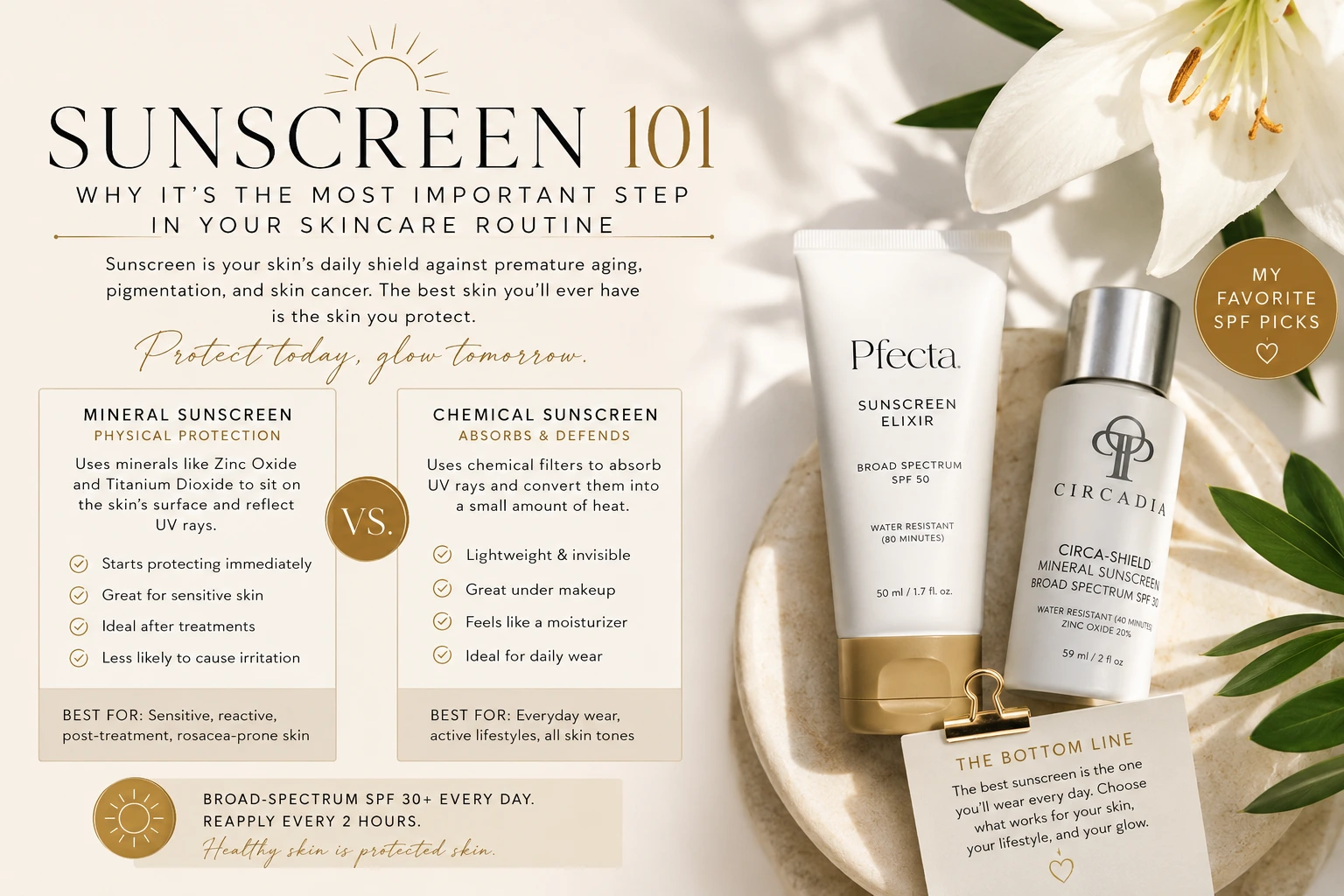
☀️ Sunscreen 101: Why It's the Most Important Step in Your Skincare Routine
When clients ask me, "What's the single best thing I can do for my skin?" my answer is always the same:
Wear sunscreen. Every. Single. Day.
Whether your goal is preventing premature aging, maintaining your facial results, treating acne, fading pigmentation, or simply keeping your skin healthy, sunscreen is your skin's first line of defense.
Think of all the money you invest in facials, professional treatments, and skincare products. Without daily sun protection, UV damage can undo much of that progress.
Why Is Sunscreen So Important?
Even on cloudy days or while driving in your car, ultraviolet (UV) rays penetrate your skin.
Daily UV exposure contributes to:
Premature fine lines and wrinkles
Loss of collagen and elasticity
Hyperpigmentation and dark spots
Uneven skin tone
Broken capillaries and redness
Increased risk of skin cancer
In fact, studies show that up to 80% of visible facial aging is caused by sun exposure—not age itself.
Sunscreen isn't just about preventing sunburn. It's about protecting the skin you've worked so hard to achieve.
Understanding UVA vs. UVB Rays
Not all sunshine affects your skin the same way.
☀️ UVA Rays – The Aging Rays
UVA rays penetrate deep into the skin where collagen and elastin live.
They are responsible for:
Wrinkles
Sagging skin
Hyperpigmentation
Collagen breakdown
These rays are present all year long—even through clouds and windows.
☀️ UVB Rays – The Burning Rays
UVB rays affect the skin's surface and are primarily responsible for:
Sunburn
Skin damage
DNA mutations
Increased skin cancer risk
A broad-spectrum sunscreen protects against both UVA and UVB rays.
Mineral vs. Chemical Sunscreen
One of the biggest questions I receive is:
"Which sunscreen is better?"
The truth is…
Both work beautifully when used correctly.
The best sunscreen is always the one you'll actually wear every day.
Let's break them down.
Mineral Sunscreen (Physical Sunscreen)
Mineral sunscreens use ingredients like:
Zinc Oxide
Titanium Dioxide
These mineral filters sit on the skin's surface and primarily reflect and scatter UV rays while also absorbing a portion of them before they can damage your skin.
Benefits of Mineral Sunscreen
✔️ Starts protecting immediately after application
✔️ Great for sensitive skin
✔️ Ideal after professional treatments
✔️ Excellent for rosacea-prone skin
✔️ Less likely to cause irritation
✔️ Reef-friendly options are widely available
Best For:
Sensitive skin
Post-facial care
Acne-prone skin
Rosacea
Pregnancy (always consult your physician)
Chemical Sunscreen
Chemical sunscreens use modern UV filters that absorb UV rays and convert them into a small amount of heat before the rays can damage your skin.
These formulas are lightweight, elegant, and often disappear completely into the skin.
Benefits of Chemical Sunscreen
✔️ Lightweight texture
✔️ No white cast
✔️ Beautiful under makeup
✔️ Great for darker skin tones
✔️ Comfortable for daily wear
✔️ Often feels like a moisturizer
Best For:
Everyday wear
Active lifestyles
Makeup lovers
Oily or combination skin
Which One Is Better?
There isn't a universal winner.
Instead, choose the sunscreen that fits your skin type, lifestyle, and personal preference.
If you...Consider...Have sensitive skinMineralHave rosaceaMineralRecently had a facial or peelMineralWear makeup dailyChemicalWant an invisible finishChemicalHave deeper skin tonesChemical or newer sheer mineral formulasSpend lots of time outdoorsEither—as long as it's SPF 30+ and reapplied every two hours
Consistency matters far more than choosing one category over the other.
My Favorite Professional Sunscreens
As an esthetician, I only recommend products I genuinely trust and enjoy using myself.
☀️ Pfecta Sunscreen Elixir
This has quickly become one of my favorite everyday sunscreens.
I love it because it:
Feels incredibly lightweight
Layers beautifully under makeup
Leaves the skin looking healthy and radiant
Doesn't feel greasy or heavy
Makes daily SPF effortless
It's the type of sunscreen you'll actually look forward to applying.
☀️ Circadia Circa-Shield Mineral Sunscreen SPF 30
Another favorite in the treatment room is Circadia Circa-Shield.
This mineral sunscreen offers:
Broad-spectrum SPF 30 protection
Zinc oxide-based protection
A silky finish
Calming ingredients for sensitive skin
Excellent post-treatment protection
I often recommend it following facials, chemical peels, exfoliation treatments, and whenever skin needs extra care.
How Much Sunscreen Should You Apply?
Most adults don't use nearly enough sunscreen.
A good rule of thumb:
About two finger lengths of sunscreen for your face and neck.
Reapply every 2 hours when outdoors.
Reapply after swimming or excessive sweating.
One application in the morning is wonderful—but reapplication is what keeps you protected throughout the day.
The Bottom Line
Beautiful skin isn't created overnight.
It's built through small, consistent habits.
Daily sunscreen is one of the simplest yet most powerful investments you can make in your skin's future. Whether you choose a mineral or chemical formula, protecting your skin every day helps preserve your results, prevent premature aging, and support long-term skin health.
At Sugar Daze Esthetics, my goal is to help you achieve healthy, radiant skin that lasts—not just after your facial, but every day in between. If you're unsure which sunscreen is best for your skin type or lifestyle, I'd be happy to help you find the perfect fit during your next appointment.
Your future skin will thank you. ✨